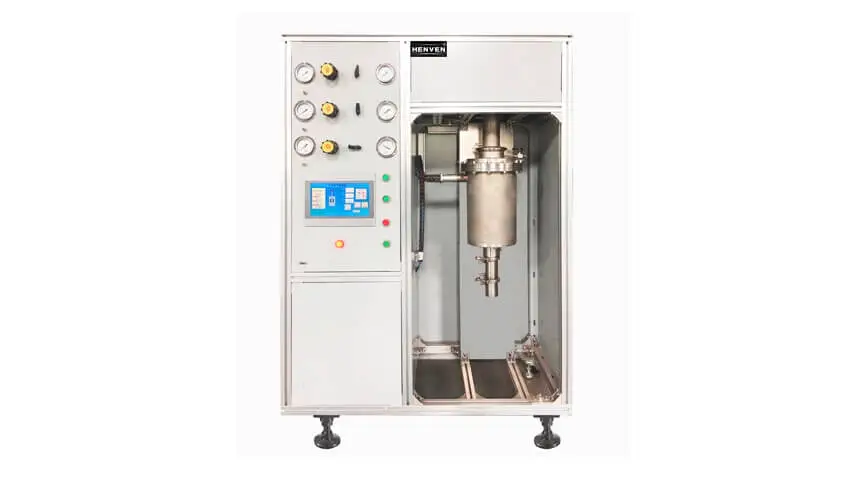
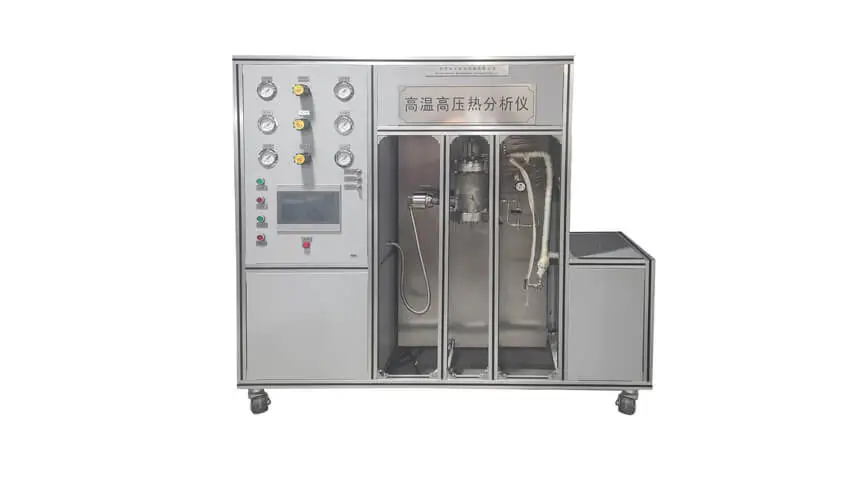
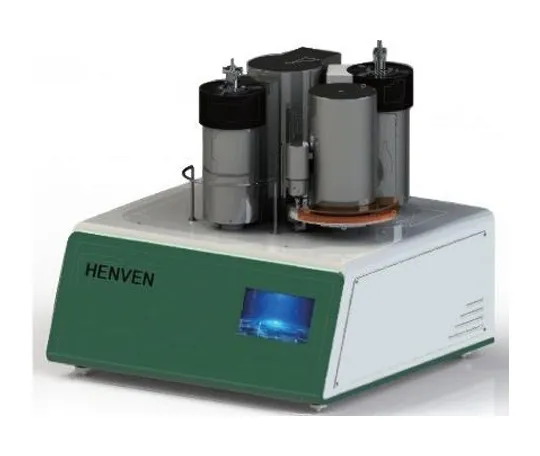
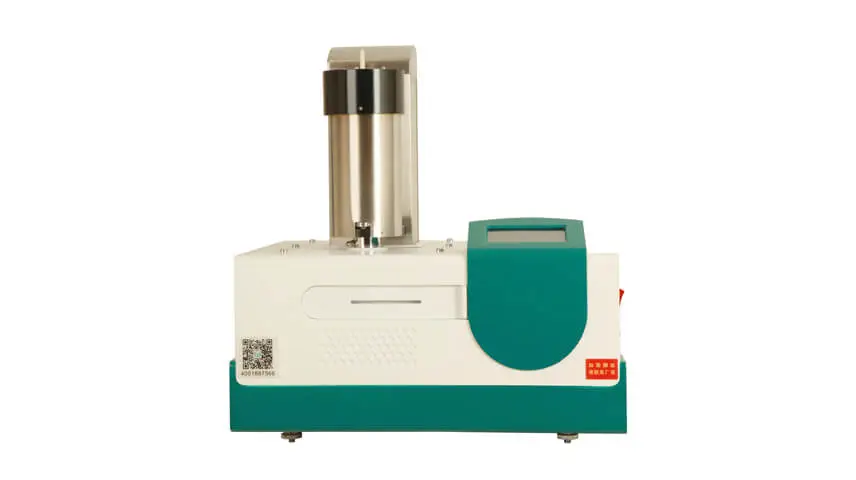
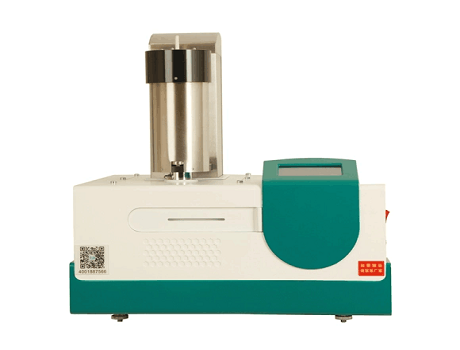
It primarily measures physical and chemical changes related to heat, such as researching changes including the melting point, heat of fusion, crystallization and heat of crystallization, phase transition reaction heat, thermal stability (oxidation induction period), glass transition temperature, adsorption and desorption, component content analysis, decomposition, combination, dehydration, and additives of substances.
Dual-furnace design with automatic sampling: Equipped with a 24-position fully automatic sampling module, it adopts a compact modular structure. This allows it to meet high-throughput experimental requirements within limited laboratory space, supporting 24-hour continuous unattended operation—greatly reducing labor costs and enhancing experimental efficiency.
Supports mixed scheduling of multiple experimental modes (e.g., isothermal, temperature-programmed, and cyclic scanning), catering to complex needs across diverse scenarios.
Sampler positioning accuracy ≤±0.05mm, ensuring precise alignment between samples and sensors.
Dynamic sampling queue support: Urgent samples can be inserted or the sequence adjusted mid-experiment, with the system automatically optimizing the workflow.
Multiple safety protection technologies: Including overload protection, abnormal state early warning with automatic shutdown, alarm functions, and sample protection mechanisms.
Optional quick-change sample trays: Tray information is automatically identified via barcode scanning or RFID, minimizing human error.
Automatic and controllable furnace lifting: Features accurate positioning to improve measurement repeatability.
Fully automated measurement process with automatic plotting. The software offers rich functionality, including:Routine data processing for DSC, TG, DTG, and DDTG;Specialized data processing (e.g., DSC peak area analysis, enthalpy calculation, kinetic parameter determination, data comparison, activation energy calculation via multiple algorithms, glass transition temperature measurement, and specific heat determination by comparative methods).
Instrument expandability: When paired with the optional constant temperature control system, it can be coupled with infrared spectrometers, mass spectrometers, and gas chromatographs for secondary detection of tar and various reaction gases. Temperature control specifications: Range: RT~200℃ Accuracy: ±0.1℃.
Special optional accessories: UV curing system, reaction process visual monitoring system, multi-channel gas mixing system, and water vapor generator control system.
Temperature Parameters | Balance Parameters | ||
Temperature Range | HQST-1:RT-1150 HQST-2:RT-1550℃ (Optional Different Furnace Bodies) | Mechanical Null-Position Photoelectric Balance | |
Temperature Accuracy | ±0.1℃ | Thermogravimetric Range | 1~200MG |
Heating Rate | 0.1℃/min~100℃/min | Balance Sensitivity | 0.1ΜG |
Thermogravimetric Noise | <0.1ΜG | ||
DSC Parameters | Differential Thermal Parameters | ||
DSC Range | 0~±500mW | Data Range | ±2000ΜV |
DSC Accuracy | ±0.1μW | Resolution | 0.01ΜV |
Calibration Parameters | In response ratio:>100 mW/K | Sample Atmosphere | Oxidation.Reduction.Inert. Vacuum |
Enthalpy Accuracy | ±0.1%(In) | Standard Configuration | Ceramic Crucibles of 0.06ml or 0.12ml |
Temperature/Enthalpy Calibration | Multi-Point Reference Material, Non-Linear Calibration Technology | Optional Crucibles | Aluminium Crucible.Graphite Crucible.Quartz Crucible.Platinum Crucible |