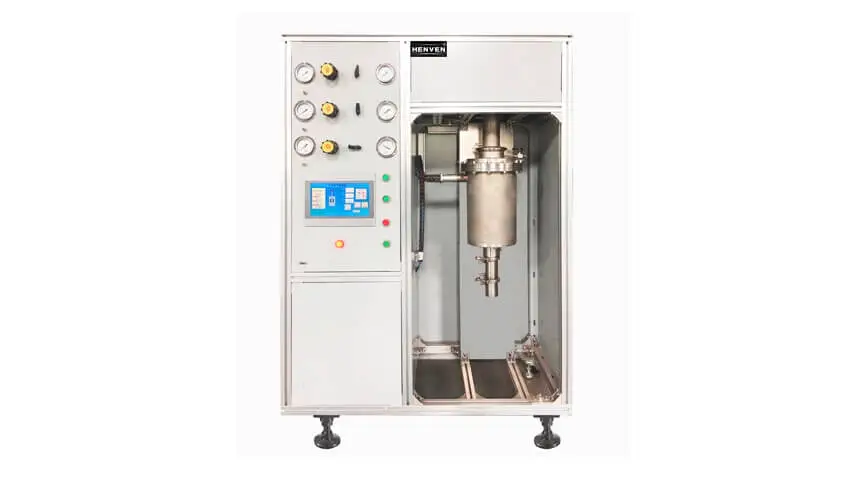
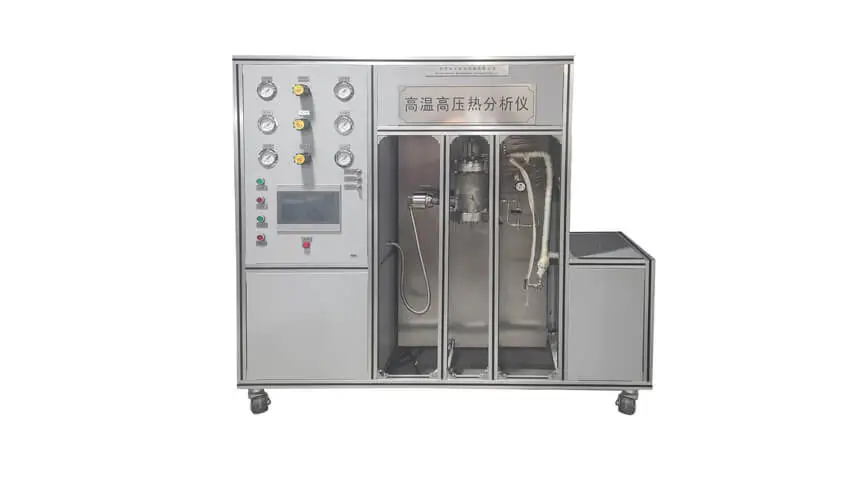
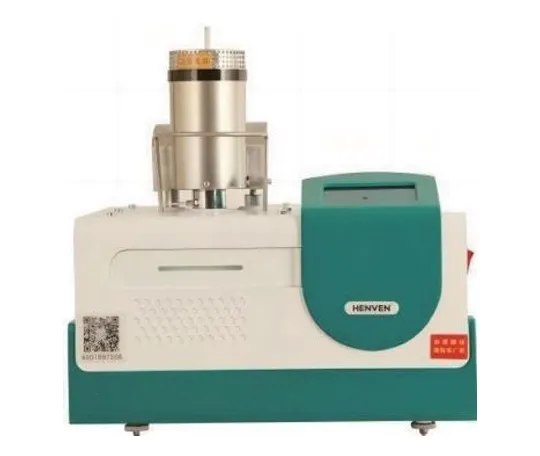
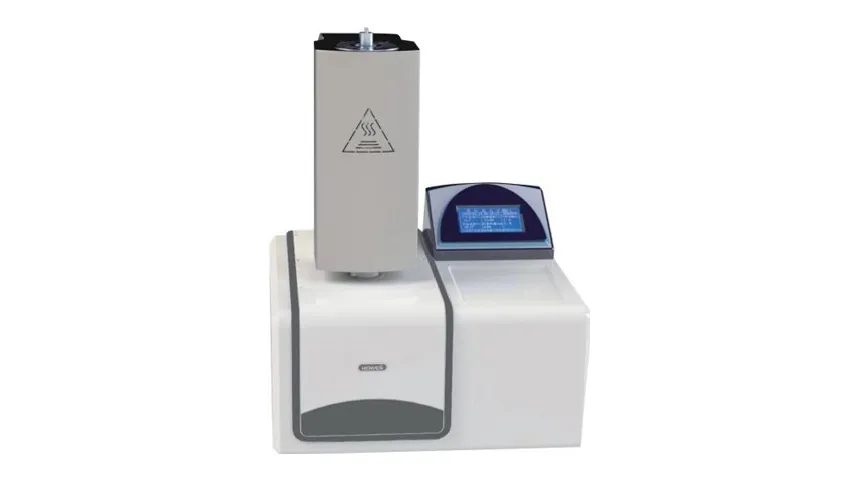
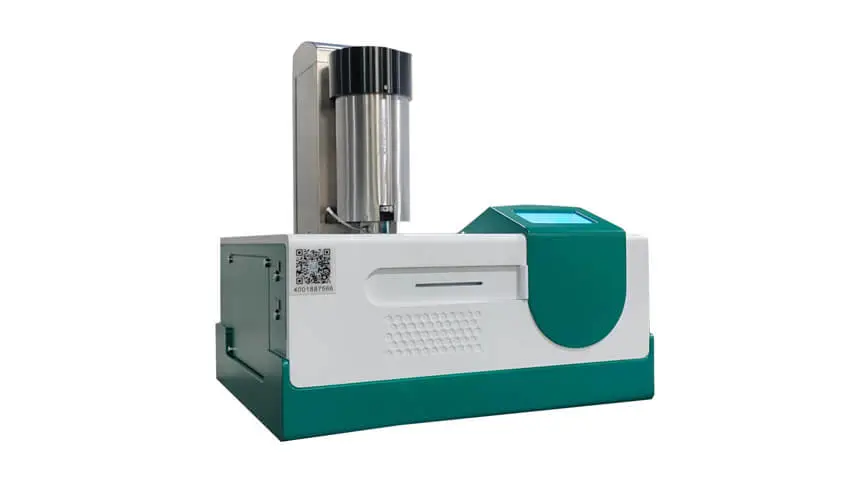
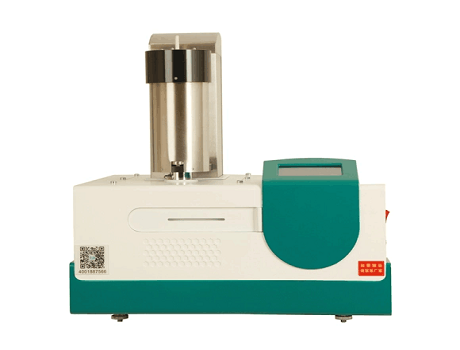
It primarily measures heat-related physical and chemical changes, including a substance's melting point, heat of fusion, crystallization and its associated heat of crystallization, heat of phase transition reactions, thermal stability (oxidation induction period), and glass transition temperature.
It mainly measures physical and chemical changes related to heat, such as studying changes like adsorption and desorption of substances, content analysis of components, decomposition, combination, dehydration, and addition of additives.
The smallest integrated instrument in China that combines electromechanics and atmosphere control, reducing signal loss and interference.
The atmosphere control system adopts mass flow controllers; three channels of gas with stable pressure and flow can be switched during the experiment, featuring high precision, good repeatability, and fast response speed (atmosphere control systems resistant to various corrosive gases can be customized).
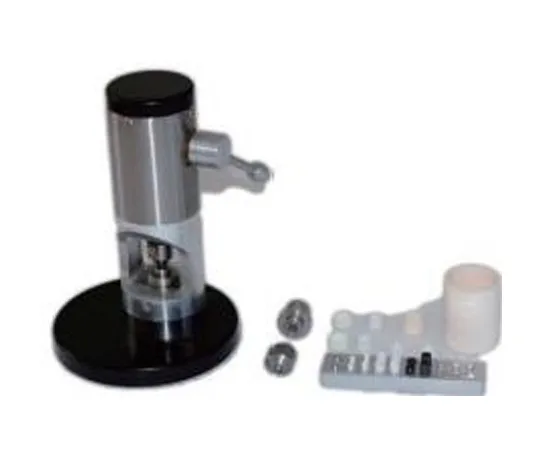
Suitable for samples from micro-quantities to large quantities (by replacing the support rod, the maximum sample weight can reach 5g), meeting the testing requirements of various samples under different conditions. Available crucible sizes include φ5×4, φ5×8, φ8×10, φ18×8, Φ18×15, Φ18×20 (mm), etc.
The entire measurement process is completed automatically with automatic graphing; the software can perform routine data processing for TG, DTG, DDTG, etc., as well as special data processing (substance percentage content calculation, kinetic parameter calculation, data comparison).
During sample data collection, the system allows screenshot capture at any time and automatically switches the measurement range according to the output signal intensity.
Users can perform temperature and thermogravimetric calibration using standard samples.
Large-screen LCD display for real-time presentation of instrument status and data; equipped with two sets of thermocouples: one displays the furnace temperature in real time (regardless of whether the heating furnace is in operation), and the other displays the sample temperature during operation.
If users provide calculation formulas or methods, our company can promptly develop and provide corresponding software products.
Independently developed constant temperature controller, constant temperature connectors for gas chromatography and mass spectrometry, and constant temperature belt; these can fully ensure the secondary detection of tar and various reaction gases.
The LCD screen displays furnace temperature, sample temperature, mass, gas circuit status, etc., in real time. | |
It features step cooling curve plotting and crystallization kinetics calculation capabilities | |
The horizontal axis can be scaled by either temperature or time. | |
The vertical axis can be scaled by either absolute weight or percentage | |
HTG-2, HTG-3, and HTG-4 can maintain a constant temperature at 1250℃, 1450℃, and 1550℃ for 72 hours respectively | |
Temperature Range | HQG-1: Room Temperature ~ 1150℃; HQG-2: Room Temperature ~ 1250℃ HQG-4: Room Temperature ~ 1550℃ |
Temperature Accuracy | ±0.1℃ |
Heating Rate | 0.1℃/min~100℃/min |
Balance Parameters | |
Measurement Range | 1mg ~ 200mg (Adjustable from 0 to 5g by replacing the support rod) |
Resolution | 0.1μg |
Thermogravimetric Noise | <0.1μg |
Vacuum Degree | Up to 2.5×10⁻²Pa with optional vacuum unit |
Atmosphere Control System | Equipped with mass flow meters (atmosphere control systems resistant to various corrosive gases can be customized) |
Optional Components (Constant Temperature Controller; Constant Temperature GC-MS Connector; Constant Temperature Belt) | Constant Temperature Range: RT ~ 200℃ |
Crucibles | -Standard Configuration: Ceramic crucibles (0.06mL or 0.12mL) |